



For owners of a healthy young animal, going away is mostly a matter of food, walks, and company. But if your pet relies on daily medication, a diabetic cat needing insulin at set times, an older dog on tablets for a heart condition, an animal recovering from surgery or managing a chronic illness, the prospect of leaving them is a great deal more daunting. Miss a dose, get the timing wrong, or hand the job to someone who doesn’t quite understand it, and the consequences can be serious.
It’s one of the most common worries we hear, and it stops a lot of people getting the break they badly need. So let’s talk honestly about caring for a pet on medication while you’re away, what’s involved, what to look for, and how the right in-home care can take the fear out of it entirely.
Why medication makes leaving so daunting
When your pet’s health depends on regular treatment, the usual options suddenly look shakier. Asking a kind but inexperienced neighbour to “pop in and give the tablet” puts a heavy responsibility on someone who may never have medicated an animal in their life, and pets, as anyone who’s tried knows, can be remarkably crafty about spitting out a pill the moment your back’s turned. Boarding facilities will often administer medication, but that means subjecting an already-unwell or elderly pet to the stress of a strange environment, which can set their health back in other ways.
What you really want is someone experienced, reliable, and calm, giving the medication correctly, on time, in your pet’s own familiar home. That’s exactly the gap a good pet sitter fills.
Timing: more important than people realise
For many conditions, when a medication is given matters as much as whether it’s given at all. Insulin for a diabetic pet, for instance, typically needs to be administered at consistent times, often tied to meals, to keep blood sugar stable. Some heart and thyroid medications work best at regular intervals. A casual “I’ll get to it when I drop by” approach simply doesn’t cut it.
A professional sitter builds the visit schedule around your pet’s medical needs, not the other way round. If your cat needs insulin every twelve hours, the visits are timed accordingly. This precision is one of the biggest advantages of a dedicated sitter over a well-meaning favour from someone juggling their own busy day.
The skill of actually getting it into them
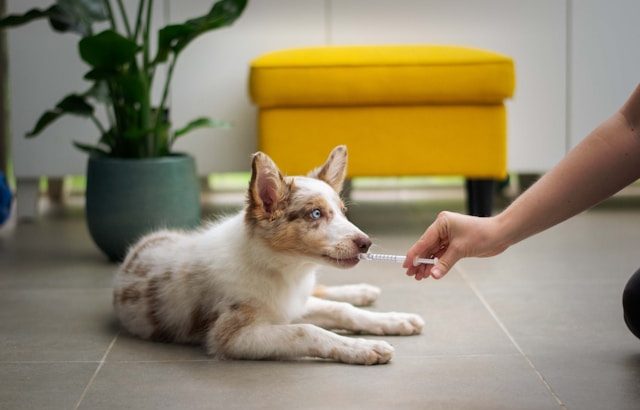
Anyone who’s tried to give a cat a tablet knows it can feel like wrestling a furry escape artist. Pets are experts at appearing to swallow a pill and then quietly depositing it behind the sofa. Liquid medications, ear drops, eye ointments, injections, each has its own technique, and doing it confidently and gently, without turning it into a battle that stresses the animal, is a genuine skill.
An experienced sitter knows the tricks: hiding tablets in a favoured treat or a little food, the right way to hold an animal calmly, how to give an injection swiftly and kindly, how to stay composed so the pet stays composed. Crucially, they also know how to check the medication has actually gone down rather than just assuming it has. We always make sure we’re fully briefed on each pet’s specific regime before you leave, so nothing is guesswork.
Watching for changes
A pet on medication is, by definition, a pet with a health condition that needs watching. Beyond simply administering the dose, a good sitter keeps an eye on how your animal is doing. Are they eating and drinking normally? Is their energy as expected? Any new symptoms, any side effects, anything off? Because we get to know each pet properly, we’re well placed to notice when something changes, and to act on it.
This vigilance is the same care we bring to looking after senior cats and dogs, who so often have medical needs of their own. An attentive eye can catch a developing problem early, which can make all the difference.
Knowing what to do if something goes wrong
The thing that frightens owners most is the “what if”, what if my pet has a bad turn while I’m away? A professional sitter plans for exactly this. Before you go, we make sure we know your vet’s details, where the nearest emergency clinic is, your pet’s medical history and current medications, and your wishes and authorisation should treatment be needed. We’ll have your emergency contact and a clear plan, so that if the worst happens, precious time isn’t lost in confusion.
This kind of preparation is part of responsible pet care generally, it’s the same thinking behind knowing your pet first aid basics, but it matters doubly for an animal whose health is already fragile.
Peace of mind for you, stability for them
The real gift of in-home medication care is twofold. Your pet gets to stay in their own home, keeping the calm, stable routine that’s so important when they’re unwell, no stressful upheaval piled on top of an existing condition. And you get to actually relax on your trip, knowing a capable person has it all in hand and will tell you how things are going. For owners who’ve spent years feeling they can never get away because of a pet’s medical needs, that freedom can be quietly life-changing.
We’re here to help
If your dog, cat, or other pet is on medication and you’ve been putting off a trip because of it, please don’t assume it can’t be managed. Across Dublin, Meath, and Louth, we provide careful, experienced in-home care for pets with medical needs, keeping treatment precisely on track in the place your pet feels safest. Have a look at our services, read more about how we work, or get in touch to talk through your pet’s particular needs. With the right care, a health condition needn’t keep you tied to home.
This post is general guidance only and doesn’t replace veterinary advice. Always follow your vet’s instructions for your pet’s specific medication and condition.