

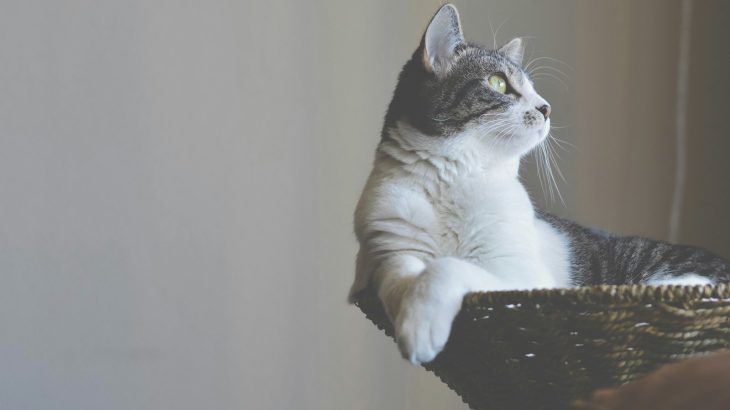
Tabby and white cat lounging contentedly in a woven basket

Why Does My Cat Sleep So Much? Understanding Feline Sleep

If you’ve ever envied your cat’s ability to sleep the day away in a sunny spot while you’re off to work, you’re not alone. Cats are champion sleepers, clocking up an astonishing number of hours compared to us. But how much is normal, and when might all that snoozing be trying to tell you something? Let’s have a look at the curious world of feline sleep.


Just how much do cats sleep?

A great deal. The average adult cat sleeps somewhere between twelve and sixteen hours a day, and some will happily push past that. Kittens and older cats sleep even more, often close to twenty hours. So if it feels like your cat is asleep every time you look at them, that’s because they very nearly are, and it’s completely normal.

This isn’t laziness. It’s biology. Cats are natural predators, and hunting takes enormous bursts of energy. Their bodies are wired to conserve energy between those bursts, resting up so they’re ready to spring into action. Even a well-fed house cat who’s never hunted a thing in their life keeps this ancient rhythm.

Crepuscular, not nocturnal

A common myth is that cats are nocturnal. In fact they’re crepuscular, meaning they’re naturally most active at dawn and dusk. This is why your cat may go thundering about the house at first light, or get a mad burst of energy in the early evening, and then sleep through much of the day and the deep night. It’s simply their instinctive hunting schedule, when prey would be most active in the wild.

Light sleep versus deep sleep

Not all cat sleep is the same. Much of it is light dozing, that famous half-asleep state where the ears still swivel towards sounds and they can be alert in an instant. Only a portion is deep sleep. This is why a cat can look dead to the world one moment and be up and investigating a rustle the next. During deep sleep you may even see them twitch, paddle their paws, or make little noises, they dream, just as we do.

As the nights draw in

You may notice your cat sleeping even more as autumn and winter arrive. Shorter, darker, colder days naturally encourage more snoozing, and a cat will gravitate to the warmest, cosiest spots they can find, a radiator, a sunny windowsill, your freshly made bed. This seasonal increase is normal, though it’s worth making sure an indoor-bound cat still gets plenty of play and stimulation so the darker months don’t tip into boredom.

When sleep might signal a problem

While lots of sleep is normal, a sudden change is worth noting. If your cat is suddenly sleeping far more than usual, seems lethargic even when awake, is reluctant to move, or the extra sleep comes alongside changes in appetite, toileting, or mood, it’s worth a vet check. Cats are masters at hiding illness, and unusual tiredness can be one of the few outward signs. Equally, a cat who suddenly can’t settle and seems restless at night may be uncomfortable. You know your cat’s normal, so trust your instincts if something seems off.

Frequently Asked Questions

How many hours a day is normal for a cat to sleep?

Most adult cats sleep twelve to sixteen hours a day, and kittens and seniors often more. It’s completely normal, cats are built to conserve energy between bursts of activity.

Why is my cat awake and active at dawn and dusk?

Cats are crepuscular, naturally most active at dawn and dusk, mirroring when their prey would be about in the wild. Those early-morning zoomies are pure instinct.

Should I worry if my cat is sleeping more than usual?

A gradual seasonal increase in autumn and winter is normal. But a sudden jump in sleep, lethargy while awake, or sleep changes alongside shifts in appetite or mood are worth a vet check, as cats hide illness well.

Is it normal for cats to twitch or make noises while sleeping?

Yes. During deep sleep cats dream, and you may see paw-paddling, twitching, or little sounds. It’s perfectly normal and rather endearing.


Let us help

Whether your cat spends the day snoozing or prowling, they’re happiest resting in their own home. When you’re away, our in-home cat minding across Dublin, Meath and Louth keeps their routine and their favourite napping spots exactly as they like them. See our services or get in touch.
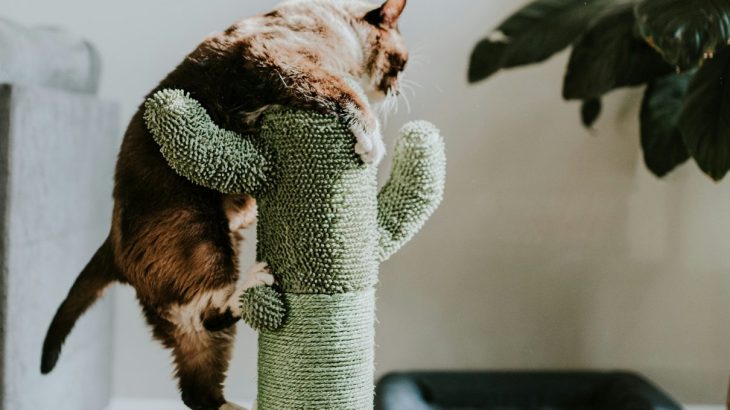
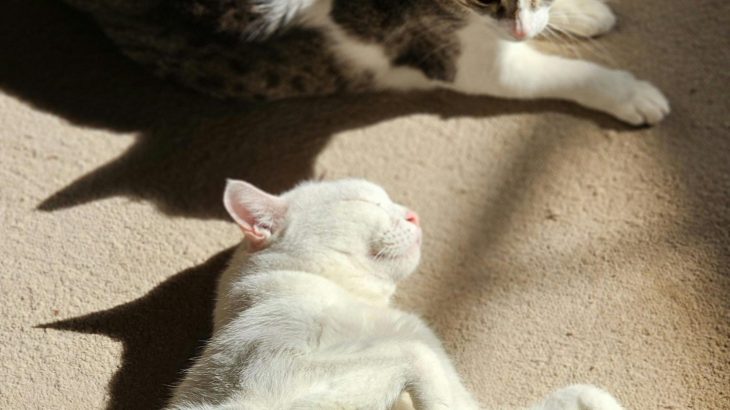

Cat climbing and scratching a green cactus-shaped scratching post in a living room

How to Stop Your Cat Scratching the Furniture (Without the Battle)

You’ve saved up for a lovely new sofa, or you’re rather fond of the armchair that’s been in the family for years, and then one day you spot it: the tell-tale shredding down one side, courtesy of your cat. If you’re nodding along ruefully, you’re in very good company. Scratched furniture is one of the most common gripes among cat owners, and it can be genuinely maddening.

But here’s the thing worth understanding from the outset: your cat isn’t doing it to spite you, and they’re not being bold. Scratching is a deep, natural, necessary behaviour for a cat, and the goal is never to stop it altogether. It’s to redirect it, gently, onto something that isn’t your good furniture. Let’s talk about how to do exactly that.


Why cats scratch in the first place

Before you can redirect a behaviour, it helps to understand why it happens. Cats scratch for several very good reasons, all of them perfectly healthy. It keeps their claws in good condition, shedding the worn outer sheaths. It’s a wonderful full-body stretch that works the muscles of the back and shoulders. And, importantly, it’s a way of marking territory, cats have scent glands in their paws, so scratching leaves both a visible and a scent-based “I was here” for other cats.

When you realise scratching is this important to a cat’s physical and mental wellbeing, the approach changes. You’re not trying to eliminate a bad habit; you’re trying to give a natural instinct a proper outlet.

Give them something better to scratch

The single most effective thing you can do is provide scratching surfaces your cat actually wants to use, and that means thinking like a cat. A good scratching post needs to be tall enough for your cat to stretch right out to full length, sturdy enough that it won’t wobble or topple mid-scratch (a wobble will put a cat off for good), and covered in a material they enjoy sinking their claws into, usually sisal rope, rough cardboard, or bare wood.

Pay attention to orientation, too. Some cats are vertical scratchers who love a tall post; others prefer to scratch horizontally and will go mad for a flat cardboard scratcher on the floor. Many like both. If you’re not sure which your cat prefers, watch where and how they’re already scratching and take your cue from that.

Location is everything

Here’s a mistake lots of well-meaning owners make: they buy a smart scratching post and tuck it away in a spare room, out of sight, then wonder why the cat ignores it and heads straight back to the sofa. Cats often scratch to mark prominent, socially important spots, which is precisely why they target furniture in the middle of your living room.

So put the scratching post where your cat wants to scratch, right beside the sofa they’ve been targeting, or in the main room where the family gathers. Once they’ve taken to it reliably, you can gradually move it a little if you must, but don’t banish it to the box room. Placing a post near where they sleep is smart too, as cats love a good scratch and stretch just after waking.

Make the furniture less appealing

While you’re making the scratching post irresistible, you can gently make the furniture less tempting. Cats dislike certain textures and smells, so temporarily covering a targeted area with something unappealing, double-sided sticky tape, a bit of tin foil, or a specially made cover, often does the trick while the new habit forms. There are also feline pheromone sprays and diffusers that can help reduce a cat’s urge to scent-mark by scratching.

Once your cat is happily using their post instead, you can quietly remove these deterrents. They’re a temporary nudge, not a forever fix.

Reward the right behaviour

Positive reinforcement works far better than telling off ever will. When you catch your cat using the scratching post, praise them, give them a treat, make a gentle fuss. You can even sprinkle a little catnip on a new post to draw them to it, or dangle a toy near it to encourage their paws onto the surface. The idea is to make the post the most rewarding place to scratch.

And crucially, never punish a cat for scratching the furniture. Shouting or spraying water doesn’t teach them not to scratch, it just teaches them to fear you and to do it when you’re not looking. It also does nothing to address the underlying need. Redirect, reward, and be patient.

Keep those claws trimmed

Regular, gentle claw trimming can reduce the damage done and is a good habit generally, especially for indoor cats and older cats whose claws can overgrow. If you’re not confident doing it, your vet or a groomer can show you how, or do it for you. Never consider declawing, it’s an inhumane procedure that’s illegal or heavily restricted in many places and amounts to amputating part of each toe. It’s simply not an option a caring owner should entertain.

Frequently Asked Questions

How long does it take to stop a cat scratching the furniture?

It varies from cat to cat, but with a good scratching post in the right spot and consistent encouragement, many cats switch over within a couple of weeks. Older habits can take a little longer, so stick with it and stay patient.

My cat has plenty of posts but still scratches the sofa. Why?

Usually it’s about the post itself or its location. Check it’s tall and sturdy enough for a full stretch, covered in a material your cat likes, and placed right where they want to scratch rather than tucked away. Try a different texture or orientation if needed.

Is it cruel to stop a cat scratching?

Not at all, as long as you’re redirecting rather than preventing. Scratching is a genuine need, so the kind approach is to give them an appealing alternative, never to punish or declaw.

Do indoor cats scratch more than outdoor cats?

Indoor cats rely entirely on you to provide suitable scratching outlets, so they can seem to scratch more around the house. Plenty of good posts and scratchers usually sorts it.


Let us help

If you’re heading away and want your cat cared for in the comfort of their own home, complete with their favourite scratching post and familiar routine, we’d love to help. Our in-home cat minding across Dublin, Meath and Louth keeps your cat relaxed and content while you’re gone. Have a look at our services or get in touch for a chat.


Why Pets Are Happier Staying in Their Own Home


There’s always a bit of planning involved when you’re going away.

Packing bags, sorting travel, double-checking everything before you leave. But for pet owners, there’s one extra question that tends to sit in the background:

What’s the best thing to do for the pet?

For years, kennels and catteries were the obvious answer. And for some animals, they still work well. But more and more owners are starting to notice something else — that many pets are simply happier when they can stay exactly where they are.

At home.

Home Is More Than Just a Place

To us, home is familiar. To pets, it’s everything.

It’s where they eat, sleep, relax, and feel safe. Every smell, every sound, every corner of the house is known to them. They know where the light falls during the day, where the quiet spots are, and where to sit when they want to be near the door.

Take them out of that environment, and even the most confident pet can feel unsettled.

It’s not just about being somewhere new — it’s about losing all the small cues that tell them they’re secure.

Routine Matters More Than We Think

Pets don’t follow calendars, but they do follow patterns.

They know roughly when breakfast happens. When the lead comes out. When the house settles in the evening. Those small, repeated moments build a sense of stability.

When that routine changes suddenly — different feeding times, unfamiliar surroundings, new smells and sounds — it can take time for them to adjust.

At home, that rhythm can stay largely the same. Meals happen as expected. Walks follow familiar routes. Rest happens in the same places it always has.

And for many pets, that consistency is what keeps them calm.

The Stress of New Environments

Even the best-run kennels or catteries come with change.

Different animals nearby. New smells. Unfamiliar noises. Less one-to-one attention. For some pets, that’s manageable. For others, it can feel overwhelming.

Dogs that are used to quiet homes may find the noise unsettling. Cats, who tend to be more territorial by nature, often find being moved out of their space particularly difficult.

It’s not about something being “wrong” with those environments — it’s simply that they’re not home.

And for many animals, that difference is enough.

Familiar Surroundings, Familiar Behaviour

One of the biggest advantages of keeping pets at home is that their behaviour tends to stay more consistent.

They eat better.
They sleep better.
They behave more like themselves.

There’s less of that adjustment period where everything feels slightly off.

Owners often notice the difference straight away. Instead of coming home to a pet that seems unsettled or out of sorts, they come home to one that’s… just normal.

And that says a lot.

It’s Not Just About Feeding and Walking

Pet care isn’t only about the practical things.

Yes, food needs to be given and walks need to happen. But there’s also the quieter side of it — presence, familiarity, knowing when to give attention and when to step back.

In a home environment, that’s easier to maintain. Pets can follow their usual habits. If they like sitting by the window, they can. If they prefer the corner of the sofa, that’s still theirs.

Nothing has to be adjusted or adapted.

Peace of Mind for Owners Too

There’s also a human side to all of this.

Knowing your pet is at home, in their own space, often makes it easier to relax while you’re away. There’s no wondering how they’re settling into a new place or whether they’re feeling overwhelmed.

Everything they need is already around them.

And when you return, there’s no transition period. No settling back in. Just the usual routine picking up where it left off.

A Word from Pet Angel Sitters

At Pet Angel Sitters, we see every day how much difference a familiar environment makes.

Pets that stay at home tend to settle quicker, behave more naturally, and feel more at ease overall. It’s not about doing more — it’s about keeping things as they are.

Because for most animals, comfort doesn’t come from new places.

It comes from familiar ones.