The First Visit: How We Get to Know Your Pet Before You Go Away

Before we ever care for your pet on our own, before you’ve packed a single bag for your trip, there’s one step we never skip: the first visit. The meet-and-greet. It’s a quiet, unhurried get-together in your own home, and while it might seem like a simple formality, it’s actually one of the most important parts of how we work, the foundation that everything else is built on.

If you’ve never used a pet sitter before, you might wonder what such a visit involves and why it matters so much. So let’s walk through it, because understanding the first visit tells you a great deal about what good pet care really looks like.


Why we won’t skip it

Here’s a principle we hold firmly: we don’t believe in caring for an animal we’ve never met. It wouldn’t be fair on your pet, and it wouldn’t be fair on you. A dog or cat being looked after by a complete stranger, in your absence, with no prior introduction, is a recipe for a stressed animal and an anxious owner. The meet-and-greet exists precisely to prevent that.

By meeting beforehand, your pet gets to encounter us while you’re still there, a reassuring presence by their side. They learn our scent, our voice, the simple fact that this new person is welcomed by you and therefore safe. That single introduction does an enormous amount to smooth the way for everything that follows.

Letting your pet take the lead

At that first meeting, we let your pet set the pace. Some dogs come bounding over, tail going like a propeller, ready to be best friends inside thirty seconds. Others hang back and need to observe from a safe distance before they’ll approach. Cats, true to form, might saunter over to inspect us or might watch imperiously from the top of the stairs, deciding in their own time whether we pass muster.

However your pet reacts, we follow their cues rather than forcing the issue. We get down to their level, let them approach and sniff, avoid looming over a nervous animal, and generally show them there’s no pressure. Building trust with an animal isn’t something you can rush, and the first visit is the gentle start of that process. Often, a wary pet who eyed us cautiously at the meet-and-greet is delighted to see us by the second or third proper visit.

Learning the details that matter

While your pet is sizing us up, we’re learning everything we need to care for them brilliantly. This is the practical heart of the visit, and we ask a lot of questions, because the details genuinely matter. We’ll want to know your pet’s full routine: when they eat, how much, and what; when and where they’re walked; their toileting habits; their sleep patterns. We’ll ask about temperament, are they nervous of anything, good with other animals, prone to bolting, friendly with strangers?

We’ll go through any health needs and medication carefully, note your vet’s details, and learn the little things that make your pet comfortable, the favourite toy, the spot they love to be scratched, the command they respond to, the noise that frightens them. We’ll find out where everything lives: food, leads, litter, cleaning supplies, the spare key. By the end, we should understand your pet almost as well as you do, so that when you’re away, nothing is left to guesswork. This thorough groundwork is a big part of why pets stay so relaxed in their own homes under our care.

It works both ways

The first visit isn’t just us assessing your pet, it’s you assessing us, and that’s exactly as it should be. This is your chance to see how we interact with your animal, to ask anything you like, and to satisfy yourself that you’re comfortable handing over your keys and your trust. We’d far rather you asked every question on your mind now than worried about it later from a beach somewhere.

We’ll talk you through how we work, what each visit will involve, how we’ll keep you updated, and what happens in an emergency. If you’ve got concerns or special requests, now’s the time. And if, for whatever reason, it doesn’t feel like the right fit on either side, that’s absolutely fine, far better to find out over a cup of tea than once a trip is booked. If you’re wondering what to ask, our post on questions to ask before hiring a pet sitter is a handy starting point.

Sorting the practicalities

The meet-and-greet is also when we tie up the practical loose ends. Keys are handed over and how we’ll store and use them is agreed. We confirm dates, times, and exactly which visits you need. We make sure we have all your contact details and an emergency contact, plus your vet’s information and authorisation for care if it’s ever needed. Getting all this squared away in advance means that when the time comes, everything runs smoothly and you can leave with genuine peace of mind.

Setting your pet, and you, at ease

By the time the first visit ends, a quiet bit of magic has usually happened. Your pet has met a new friend in the safety of their own home. You’ve seen that friend handle your animal with warmth and care. The practical details are sorted. And the anxiety that so often comes with leaving a pet has eased considerably, replaced by the comfortable knowledge that they’ll be in good hands.

That’s the whole purpose of the meet-and-greet: to turn a stranger into a trusted carer before it ever matters, so that your time away is restful for you and as close to ordinary as possible for your pet.

Come and meet us

If you’re in Dublin, Meath, or Louth and thinking about pet care for an upcoming trip, the first step is simply to say hello. Whether you need dog walking, cat minding, or care for rabbits, birds and other small pets, it all begins with a relaxed meet-and-greet in your home. Take a look at our services, read more about us, or get in touch to arrange a visit. We’d love to meet you both.
What to Look for in a Trustworthy Pet Sitter: A Guide for Irish Pet Owners

Handing someone the keys to your home and the care of your beloved pet is no small thing. You’re trusting a near-stranger with two of the things you value most, your animal’s wellbeing and the security of your home. So it’s only right to be a little careful about who you choose. A good pet sitter is worth their weight in gold; the wrong one can cause real worry. The trick is knowing how to tell them apart before you book.

Whether you’re arranging care for the first time or you’ve been let down before and are looking for someone better, here’s what genuinely matters when choosing a pet sitter you can trust.


Insurance is non-negotiable

Let’s start with the one that too many people overlook. A professional pet sitter should carry proper insurance, public liability at the very least, and ideally cover that protects against accidents, injury, or damage while they’re caring for your pet and in your home. This isn’t bureaucratic box-ticking; it’s basic protection for everyone involved.

Ask directly: “Are you insured?” A trustworthy sitter will answer without hesitation and be happy to show proof. If someone is vague, defensive, or hasn’t bothered with insurance at all, that tells you something important about how seriously they take the responsibility. We’ve written before about why insurance matters in pet care, because it really is that fundamental.

References and reputation

A sitter worth hiring will have a track record, and they won’t mind you checking it. Look for reviews and testimonials, ask for references from existing clients, and actually follow up on them. In a close-knit place like Ireland, word of mouth is powerful, ask your neighbours, your vet, the local dog-walking community. A good reputation is hard to fake and slow to build, so it counts for a lot.

Be a little wary of anyone with no reviews, no references, and no online presence whatsoever. Everyone starts somewhere, of course, but established trust is established for a reason.

They insist on a meet-and-greet

Here’s a green flag worth looking for: a good sitter wants to meet your pet before committing, and often insists on it. This initial visit isn’t a formality, it’s where they learn your pet’s temperament, where you gauge how they interact with your animal, and where everyone decides whether it’s a good fit. A sitter who’s happy to take on a dog they’ve never met, sight unseen, is cutting a corner that shouldn’t be cut.

Watch how they are with your pet at that first meeting. Do they get down to the animal’s level, let them approach in their own time, read their body language? Or are they pushy and oblivious? Animals are wonderful judges of character, and your pet’s reaction tells you plenty.

Clear communication and reliability

Trust is built on communication. From your very first contact, notice how a sitter handles things. Do they reply promptly? Are they clear about what’s included, what it costs, and what happens if plans change? Do they ask thoughtful questions about your pet, or just nod along? A sitter who communicates well before you’ve even booked is one who’ll communicate well while you’re away, sending updates and photos, and flagging anything that crops up.

Reliability matters just as much. Your pet is depending on those visits happening, on time, every time. A sitter who’s flaky about appointments before you’ve hired them won’t magically become dependable once you’re on a plane.

The right questions to ask

Don’t be shy about interviewing a potential sitter, any good one will welcome it. Ask what happens in an emergency: do they know where the nearest vet is, can they transport your pet, what’s the plan if your animal falls ill? Ask whether they’ll be the one doing every visit or whether others are involved. Ask how they handle keys and home security. Ask about their experience with your particular type of pet, especially for rabbits, birds or other less common animals that not every sitter understands. We’ve put together a fuller list of questions to ask before hiring a pet sitter that’s well worth a read.

Trust your instincts

Finally, listen to your gut. You can tick every box on paper and still feel that something’s not quite right, or meet someone who simply feels trustworthy, careful, and genuinely fond of animals. That instinct is worth heeding. You’re not just hiring a service; you’re choosing someone to care for a member of your family. The right sitter leaves you feeling reassured, not uneasy.

What sets good care apart

The best pet sitters share a few things in common: they’re insured, they’re experienced, they communicate openly, they insist on knowing your pet before they care for them, and above all they treat your animal with the genuine warmth you’d want. At Pet Angel Sitters, these aren’t selling points we reach for, they’re simply how we believe pet care should be done.

If you’re in Dublin, Meath, or Louth and looking for care you can trust, we’d be glad to earn it. Learn more about us and our approach, see our range of services, or get in touch for a no-pressure chat and a meet-and-greet. Your pet deserves someone you can rely on completely, and so do you.


A Day in the Life of Your Dog Walker: What Really Happens While You’re at Work

When you hand someone a key to your home and trust them with your dog, you’re placing an enormous amount of faith in a person you might only meet a handful of times. It’s natural to wonder, somewhere in the back of your mind during a busy workday, what’s actually going on back home. Is the walk happening? Is my dog happy? Is everything as it should be?

We think that curiosity deserves a proper answer. So rather than ask you to simply take it on trust, we want to pull back the curtain and walk you through what really happens when one of our walkers calls round to your dog. Because the truth is, a good dog walk is far more than a quick lap of the block, there’s a whole quiet craft to it, and we’d love you to see it.


It starts before the door even opens

A good visit begins with knowledge. Before a walker ever turns a key, they already know the important things about your dog, and that’s no accident. When you first sign up with us, we gather the details that matter: how your dog behaves on the lead, whether they’re nervous of other dogs, what their recall is like, any health conditions, where the lead and poo bags live, and the little quirks that make your dog your dog. One might bolt at the sight of a cat; another might be a gentle soul who greets every passer-by. Knowing this in advance is the difference between a smooth walk and a stressful one.

This groundwork is part of why we always insist on getting to know a dog properly before we start. You can read more about how we work on our about us page, but the short version is this: we never walk a dog we don’t understand.

The arrival: calm is everything

Picture the moment your walker arrives. For your dog, this is a big event, a key in the door, a familiar friend stepping inside. Some dogs are beside themselves with excitement; others, especially newer or more nervous ones, need a moment to settle. A skilled walker reads this instantly and matches their energy to the dog’s needs.

Rather than charging straight out the door in a whirl of excitement, a good walker takes a beat. A calm greeting, a moment to let an excited dog get the zoomies out of their system, a gentle hello to a shy one. This sets the tone for the whole walk. A dog who leaves the house wound up to the nines is a dog who’ll pull and fret the whole way round; a dog who leaves calm is a dog who’ll enjoy themselves.

The walk itself: not just exercise

Here’s something many owners don’t realise, a walk is as much about the mind as the body. Yes, your dog needs to stretch their legs and burn off energy, and that matters enormously. But the sniffing, the exploring, the reading of every lamppost and hedge like the morning paper, that mental stimulation is just as important to a dog’s wellbeing as the physical side.

So a good walk isn’t a forced march at the walker’s pace. It’s a balance: enough brisk movement to tire the body, enough freedom to sniff and explore to satisfy the mind. We pay attention to the route, too, avoiding hazards, keeping to safe paths, steering clear of that one garden with the gate that never quite latches. On warm days we adjust, walking in the cooler parts and watching closely for any sign of a dog overheating, which is something we take very seriously here in even our mild Irish summers.

Throughout, your walker is watching. Is the dog moving freely, or favouring a leg? Eating grass more than usual? Off their usual form? A walker who knows your dog notices these things, and they’re often the first to spot when something’s not quite right.

Back home: the part people forget

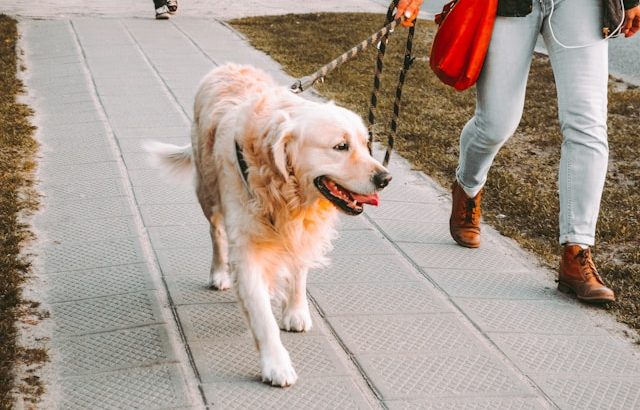
The walk ending doesn’t mean the visit ending. Back at the house, there’s a whole routine that matters just as much. Muddy paws get wiped so your hallway doesn’t pay the price. Fresh water goes down. The dog gets settled, a treat if you’ve okayed it, a moment of fuss, a check that they’re calm and content before the walker leaves. A dog left agitated and alone right after a walk doesn’t get the full benefit; a dog left calm and contentedly tired will happily snooze the afternoon away.

The walker also does a quick scan of the home. Doors locked, nothing amiss, everything as it should be. You’ve trusted us with your home as well as your dog, and we don’t take that lightly.

Keeping you in the loop

Then there’s you, back at your desk, wondering. This is where a quick message and a photo earns its keep. A snap of your happy, muddy dog mid-adventure, a line to say all went well, it’s a small thing, but it lifts a real weight. You get to picture exactly where your dog is and know they’re grand, rather than spending the afternoon quietly worrying. We think that peace of mind is a core part of the service, not an optional extra.

Why the details matter

You might be reading all this thinking it sounds like a lot of care for “just a walk.” And that’s rather the point. Anyone can clip a lead on a dog and trudge round the block. What you’re paying for, what your dog deserves, is someone who treats that walk as the meaningful part of your dog’s day that it is. Someone who notices, who adjusts, who genuinely cares whether your dog is happy.

It’s also worth saying that a tired, well-walked dog is a better-behaved dog at home. So much of what owners label “bad behaviour”, chewing, barking, restlessness, is simply a dog with unspent energy and an under-stimulated mind. A proper midday walk can transform a dog’s whole demeanour, and by extension, your evenings together.

Letting us take the lead

If you’re in Dublin, Meath, or Louth and your dog is spending long days alone while you work, a regular walk could be the best thing you do for them. Our dog walking service is built around exactly the kind of care described above, calm, attentive, and tailored to your individual dog. And because we look after a whole range of pets, from dogs to cats and smaller companions, we can often help with more than just the walk.

Have a look at our gallery to see some of the happy dogs we walk, read more on our blog, or get in touch for a chat about what your dog needs. We’d be delighted to become the friendly face your dog waits for each day.